Pearl…

I’ve been fortunate to visit Pearl Harbor twice. The first time was as a 20 year old college junior who snuck away from an Association of American Geographers conference for a morning tour. I was 20 years old and even though I was a history major and avid reader of all things World War II, I didn’t know a damned thing. I wasn’t in a mental place to be ready to understand what I was seeing. That’s made all the more pointed when I look now at the last American survivors of that attack 75 years ago. They were all in their mid-teens then.

The second time I got the chance to stand a few feet above the water of Pearl Harbor on the memorial that straddles the shattered hulk of the Arizona I was pushing 30. I’d done a lot more reading and lived another decade of life. It was enough to give me a far different perspective of that place and its history than my earlier visit. The slow, steady trickle of oil rising from Arizona. The leis floating on the next tide. The rusted out stubs of turrets still still defiantly holding their own above the waterline.

Pearl Harbor is an active naval base; still – maybe more than ever – the hub of America’s presence in the Pacific. It’s also a monument to a time very nearly gone from living memory when the the entire world went to war. More importantly, it’s a sacred space. Sanctified as Lincoln said of an earlier battlefield of an earlier war, by the “brave men, living and dead, who struggled here… far above our poor power to add or detract.”

You owe it to yourself, if you can, to find your way to these places where America poured out the flower of its youth in defense of liberty and giants walked upon the earth.
OK, we’ll go…

At this very hour 72 years ago the English Channel between the south of England and the Normandy coast was churned by the largest naval armada ever assembled. From the massive battleships to the tiniest landing craft, these ships carried the flower of Allied youth – the best trained and equipped army that was ever sent to war. All these brave souls knew their mission and more importantly they knew that if they weren’t killed in the crossing, a few short hours later the ramps of their landing craft would drop and they would face an enemy who was entrenched on the high ground and who had years to prepare his defenses.

On beaches named Sword, Gold, Utah, Juno, and Omaha, those ramps dropped and soldiers bled and still they fought on to overwhelm the German defenders. They established a toehold and then a beachhead in Occupied Europe. Then they fought through another fifteen months as liberators rather than conquerors.

That’s what our grandparent’s or great-grandparent’s generation did to ensure freedom and liberty weren’t extinguished… So when a student today, tucked comfortably on a college campus, says they need a safe space or a trigger warning or protection against micro-aggression, honest to God I can’t for the life of me understand what their pansy asses are whining about.

If I’m rolling my eyes I can only imagine what their long ago counterparts crossing the last hundred yards of open water into the teeth of hell might think.

A simple thank you…

It would be easy to get carried away with superlatives on Veterans Day – the most, the best, and so on. Plenty of blogs, Facebook posts, and news outlets went that way. It’s hard to go wrong following that route.

My approach is a little more basic: A simple thank you to that long line of men and women who have served our nation in uniform. It may not always be easy to tell on the other days of the year, but your sacrifices did not go unnoticed, for without you there would be no us.

Prized possession…

Among the most prized possessions is a two inch by two inch chip of concrete. Its multi-hued layers of spray paint on one side contrast starkly to the dirty gray pebbled other. It’s altogether fitting that the two sides are so different. This small piece of otherwise unimpressive construction material bore witness to one of the 20th century’s great follies when it was a part of a much larger engineering project – the wall in Berlin that once stood as the most visible possible reminder of the long cold war between east and west.

It was brought back not long after the wall’s demise by a friend of the family. With all the audacity an 11 year old could muster, I asked if I could have it and he graciously said yes. Wherever I’ve traveled from then until now it’s always the piece given pride of place – a reminder of the monumental stupidity that can and does grip the world and those who would lead it.

Ultimately that wall came down not because of permission from Moscow or brave decisions on the part of the East German government, but because thousands of people showed up at the gates demanding passage from east to west and there they stayed refusing to take no for an answer. Sure, political conditions were just right for such bravery in late 1989, but ultimately it was the people who showed up demanding their freedom who overwhelmed the wall.

Twenty five years ago tonight, we watched live pictures from Berlin of sights no one every really expected to see. Within a year Germany was reunified. In little more than two, the mighty Soviet Union itself would cease to exist. The end of that long nightmare didn’t start in Berlin, but it was there when we all knew, really knew, for the first time that its ending was in sight.

My little piece of the wall may be worth next to nothing in dollars and cents. If I ever find this joint on fire with time to save just one thing someone reading this post will find me on their doorstep with nothing more than a little chunk of concrete in my hand because to me it’s worth far more than its weight in gold.

The age of conquest…

Columbus Day is one of those odd holidays that no one enjoys unless you’re Italian, work for a bank, or find yourself in the employ of the federal government. There are plenty of hand-wringers out there who tell us that it’s Indigenous People’s Day or that there should be no celebration at all commemorating the arrival of Europeans in the New World – I also choose not to quibble about things like who got here when or whether it should be Lief Erikson Day. The concept of discovery is more important than the individual act itself. And to those out there wanting to argue that you can’t “discover” a place where people already life, I mostly say “nuts.” Columbus and his crew discovered territory that, to them and to most of Europe at the time, was new and wholly unexpected. Call it a flapjack and it’s still a rose by any other name.

See, Columbus sailed during what use to be called the Age of Conquest. Some nations and civilizations did the conquering and others were vanquished. It’s happened since the dawn of recorded time and was happening long before we bothered writing the stories down. As often happens with the vanquished, we don’t hear much about their history. Now as a student of history myself, I’m all about understanding their story, but I’m not about rewriting the entire age of exploration into an overly simple victim narrative. Likewise, I’m under no illusion that Columbus or those that followed are some kind of demigods. History is a more complex animal than that.

All I’ll say is we’d do well to learn a bit more about the Age of Conquest. I suspect some of the lessons there are shockingly applicable to those of us schlepping around in the modern world.

In triumph shall wave…

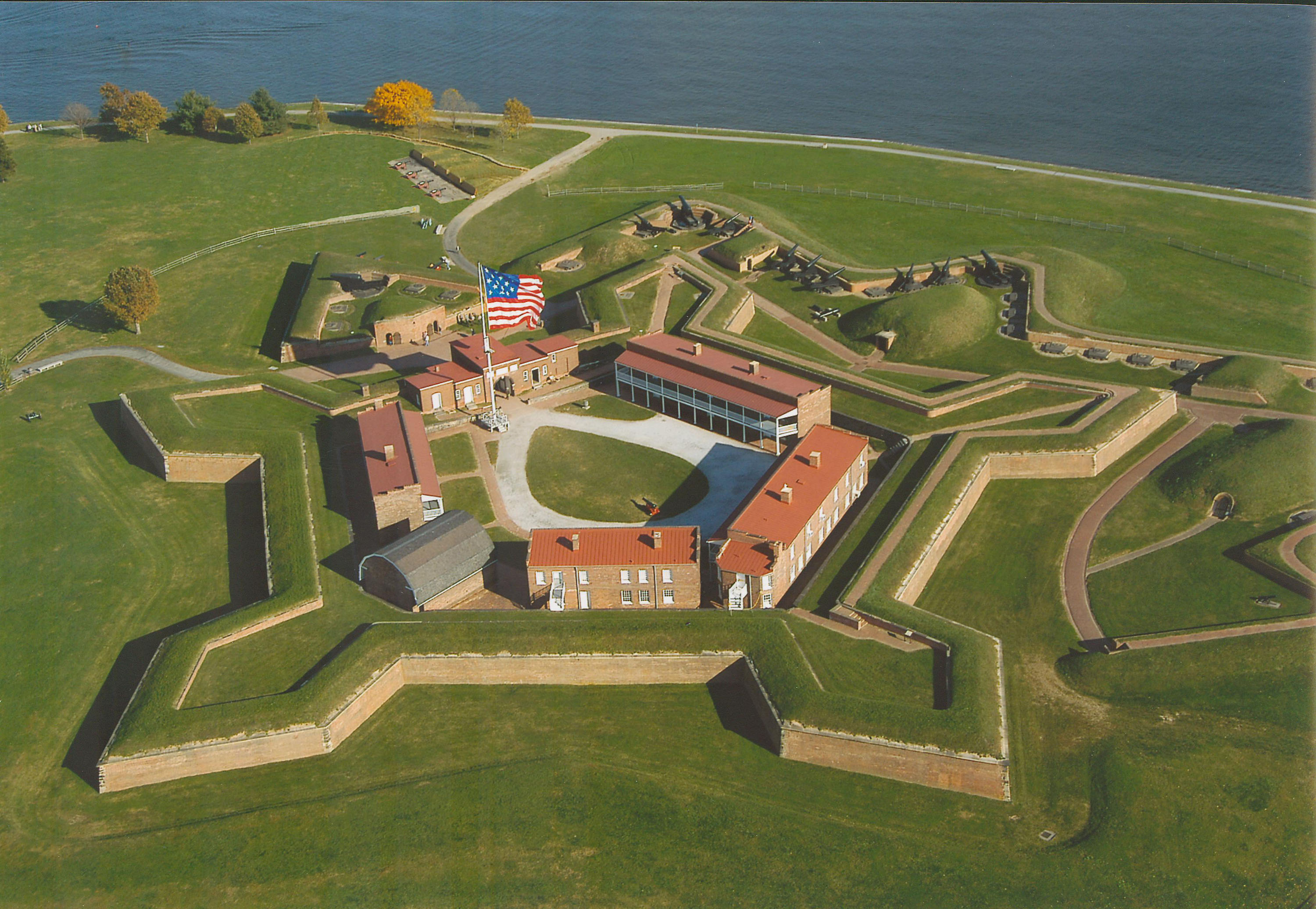
20060809101028Today we celebrate the 200th anniversary of American victory at the Battle of Baltimore. At dawn on September 14th, 1814 a 30×42 foot flag was raised over the embattled Ft. McHenry. After 25 hours of bombardment by a numerically superior British force the American Army held it’s position, securing the entrance to Baltimore’s harbor and denying the British invaders a second major victory following their sack of Washington.

At seeing this massive flag flying over the fort’s battlements, a Maryland lawyer, Francis Scott Key, was so moved that he noted his thoughts in the form of a poem – Defence of Fort M’Henry – that would serve as the lyrical basis for America’s national anthem.

If the American Revolution gave birth to our republic, the War of 1812 – and the Battle of Baltimore – confirmed that the new nation would be preserved and not restored to the dominion of a far away monarch.

The last perfectly average day…

September 11I don’t remember a damned thing about September 10, 2001. It must have been a perfectly average Monday. I was a second year teacher just trying to get through the week – or more likely trying to get through until Thursday and pint night at the Green Door.

America went to bed that night a nation more or less at peace with the world – victors of the Cold War and long past the 100 hour ground war in Iraq – we contented ourselves with international peacekeeping and the occasional cruise missile strike. We collectively went to sleep not knowing what would happen a few hours later. We went to sleep not knowing we were already at war and that the enemy wasn’t coming for us from across the ocean, it was already here living amongst us. For a few more hours, ignorance was bliss.

Not long after dawn, thirteen years ago tomorrow, the enemy came out of a vivid blue sky, targeting indiscriminately men and women and children and killing our kin and countrymen in their thousands.

I don’t remember anything about the 10th of September, but I remember almost everything about the day that came after it. If I let it the whole thing can spool through my memory like a newsreel. When I think about it now, especially today, the anniversary of the last day that was perfectly average, the sting and loss and anger all come back. It’s just like it happened yesterday.

That’s for the best. So many are bent on forgetting – on reinventing a past that never existed – that those of us who lived through it owe it to ourselves and to the next generation to never forget what we saw and what actually happened on those days in September. As for me, I’ll never forget. I’ll never forgive those who did it or those who supported them and who support them still. At every opportunity I’ll call for my country to be vigilant, to take the war to the enemy, and to beat back the gathering international darkness using every element of our national power.

We’ve all most likely seen the last of our perfectly average days. From here on out I’m afraid we’re destined to live in interesting times.

The draft…

SSSI was scrolling through Twitter last night when I ran across a tweet from someone I follow commenting on watching the draft on television… Which my brain immediately processed as The Draft. The one in which numbers are assigned and men between 18-26 are inducted into the military. The draft that was never part of my personal life experience as it ended years before I was born. Rather than look for a some kind of draft that a normal person might be expected to watch in 2014, my brain rolled low def news footage from the early 1970s.

Apparently, the tweet in question had something to do with the National Football League. Who knew?

Flat out thinking…

There are always stories circulating about people who retire with thousands of hours of sick leave on the books. That’s good for them. 3000 hours of sick leave gives you a hell of a lot of credit towards your total years of service. As great as that sounds, I know I’m not going to be one of those people. I’m not an iron man. I don’t play hurt when I can avoid it and I don’t go in when I’m hacking up a lung. For one thing, I know that I don’t bring my A-game when I’m sick or hurt and for another it only seems decent not to wander in and infect everyone else with whatever crud I happen to have come down with. This week has been an object lesson in the former; a great primer for why I avoid playing hurt.

It really boils down to a matter of concentration and focus. When part of my brain is focused on just how damned uncomfortable I am, I’m not doing my best work. Chances are, I’m not even doing good work. I’ll probably never get nominated for employee of the quarter with that attitude, but it is what it is. One of the key lessons I’ve learned on the job is if you don’t look out for yourself, there’s no one else going to take the time to look out for you either. Long story short, yesterday’s post talked about the inevitable guilt that goes along with the sick day. I had plenty of time after writing that post to put some real thought into it – since laying flat on the floor isn’t good for much else than giving you time to think. It’s safe to say that after really reflecting on the last decade, I’m utterly cured of whatever misguided guilt I was feeling for staying put and taking care of me.

The job is happy enough to chew you up and grind you down. It’s your job to do whatever it takes to make sure that doesn’t happen. Here endeth the lesson.

Darkness at dawn…

It occurs to me that when I wake up at the customary weekend time of 6:30 it’s going to be absolutely dark again at a time of day I’ve just started getting use to having light. Tomorrow, though, the sun will follow me up in short order. The big problem is coming on Monday, because 6AM looks awfully bleak when it’s pitch black outside.

There’s probably a fine balance that we could strike between springing forward and falling back. As I’ve covered before, I’d say just do away with the whole mess completely and let the time and daylight operate independently of one another rather than making a hash of yoking them together as we have for the last hundred odd years. Surely tinkering with the time could simply be solved by letting individuals adjust their own wake-up time to accommodate the mount of daylight they want earlier or later in their respective day.

Frankly the whole concept of daylight saving time feels like a concept that has outlived its usefulness. Now that we’re well into the 21st century and even farming can be done by GPS in the dead of night, why we can’t simply pick one or the other and stay there is simply beyond my meager abilities to understand.