Feeling a little nostalgic…

It’s been a minute since the last time I spent a day glued to NOAA weather briefings, memorizing Department of Transportation route plans, and casting a professional eye towards America’s excess bottled water and ice production and storage capacity. It was a gig that required finding ways to say yes as often as possible, but also offering definitive “no’s” when there was no way to get there from here. I mostly enjoyed the work… and I was good at it.

On days when the storm flags are up, I almost miss it. Working hurricanes was one of the few times in my career I could draw a straight line between the work and the outcome. It was more than editing version 26 of the next set of PowerPoint slides. Getting personnel and supplies marshaled and delivered to the people and places where they were needed was possibly the only time in my long career I’ve felt like I was legitimately accomplishing something.

Now, the TV screens are flickering between cabinet secretaries resigning under fire and the arrival of what should be a routine, if not trivial, tropical storm along the Gulf Coast. With unseasonably high water on the Mississippi, a few feet of storm surge, and the potential to drop ten or more inches of rain in a few hours, Barry isn’t an unusual storm… but he does does arrive bring an unusual confluence of factors that probably don’t bode well for New Orleans and southern Louisiana.

My armchair professional best guess is that the levees will hold this time, but the bigger factor will be the city’s pump capacity. Not even the vaunted pumps installed after Karina are sized to de-water that much sustained rainfall over a period of hours.

I know tonight over at 500 C Street, SW there’s a small army of FEMA personnel and an array of planners from the federal partner agencies making educated guesses on what’s needed, when it needs to get there, and how to deliver it effectively. On days like this, I miss the urgency of that kind of work… but lord, I don’t miss the 16 hour days.
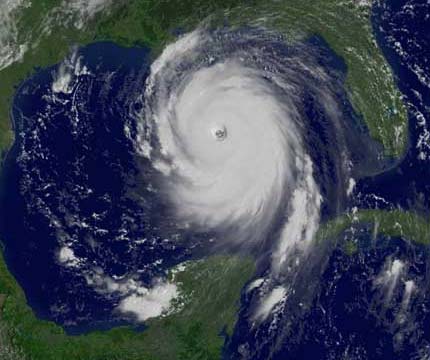
Revisiting Katrina…

The 50% of my job that doesn’t deal with PowerPoint is almost exclusively taken up by reading and writing. (We’re going to pretend for purposes of this discussion that good productive time isn’t serially wasted by the requirement to attend meetings.) This week I’ve been katrina_satellitereading up on some rather elderly documents that led me all the way back to late August 2005. To set the stage, it was hot and humid in Washington, DC and all hell was breaking loose along the Gulf Coast of Mississippi and Louisiana.

My memories from Katrina differ pretty significantly from what most people remember seeing on the news. I remember a federal response effort that practically pleaded and begged state and local leaders in Louisiana to ask for assistance and that staged people, equipment, and mountains of “stuff” as close to the Louisiana border as possible when it became obvious to everyone but those officials that Katrina was going to overwhelm their capacity to respond. The Louisiana governor and New Orleans mayor had a different perspective, of course. All I know is the information showing up hourly on my desk in stacks of reports didn’t jive with the story they were telling in front of the camera. The real truth is probably somewhere in the middle.

I’d be hard pressed to reveal myself to be a bigger geek than you already think I am, but for me it was fascinating combing through the files of a different organization with a wholly different mission and reading their take on what was going on in Louisiana that summer. Reading accounts that weren’t filled with statistics of water, ice, temporary roofing material, and body bags on hand or tons of debris removed gave me a little fresh appreciation for what we were trying to do that summer. I guess that’s not all that surprising. With a degree in history I’ve always had a penchant for looking to the past to make informed guesses about what the future may hold.

Katrina was what one might call a significant emotional event for many and I’m not trying to make light of that in any way. At the same time, for me, Katrina started 60 days of some of the best professional work I’ve ever done. It was equal parts rewarding and exhausting – often simultaneously. Eight years after the fact, I won’t deny that I’m finding myself looking back on it with a bit of fond nostalgia. I suppose that’s fairly easy to do when you rode out the storm and its aftermath hunkered down in DC with electricity, running water, and a Starbucks in the lobby.

Bias Much?

I was working in a FEMA office when the first reports of levees breaking in New Orleans came across the wires. Within minutes it seemed that the federal government was useless and the administration incompetent.

Today, five days after Sandy pummeled the East Coast, residents of New York and New Jersey are in almost exactly the same situation, but the media collectively don’t seem to be pounding the same drum.

I’ve certainly got my own view on why the two stories seem to be getting different treatment. I hope there are plenty of people out there in the blogosphere noticing the same thing. And above all, I hope there are readers from coast to coast wondering why one was the “story of the century” and the other doesn’t seem to be getting much more attention than a few “human interest” stories. It would be farcical if the result wasn’t so damned important.

Any way the wind blows…

I haven’t chased a hurricane since Dean in 2007, but there’s something about seeing the storm warnings go up that still gets in my head. It’s a twitchy feeling that I should pack a bag, clear my schedule, and track down an overtime request form.

Emergency managers usually get a bad name for being unprepared, unresponsive, or just plain out of their depth in planning how to respond to something like a hurricane or an earthquake. The truth is that even though I’m sitting here looking at a forecast track that is eerily similar to Katrina’s, Isaac will behave completely differently. Even when they hit the same place, no two natural disasters are exactly the same… and no amount of pre-planning will overcome the natural tendency of large groups of people to do exactly the wrong thing in an emergency (like staying in a city that’s only kept dry when the levees work and the pumps keep running).

I could tell you stories of horrifyingly bad judgment from everyone from FEMA Administrators, to state governors, to local elected leaders, to average schleps on the ground working under the misguided assumption that they were doing the right things. When you have a bird’s eye view of the event, it’s surprisingly easy to see where things are going wrong. It’s incredibly frustrating and harder than hell to get them going in the right direction, though. In all likelihood I’ll never work another day in emergency management, but after a five year absence, I can honestly say that I’d do it again in a heartbeat if the circumstances every presented themselves.

For now I suppose I’ll follow along on TV like everyone else and just be glad it’s not me on the hook to find millions of gallons of water, tons of ice, and wheels to put under all of it.