On hard decisions and heartbreak…

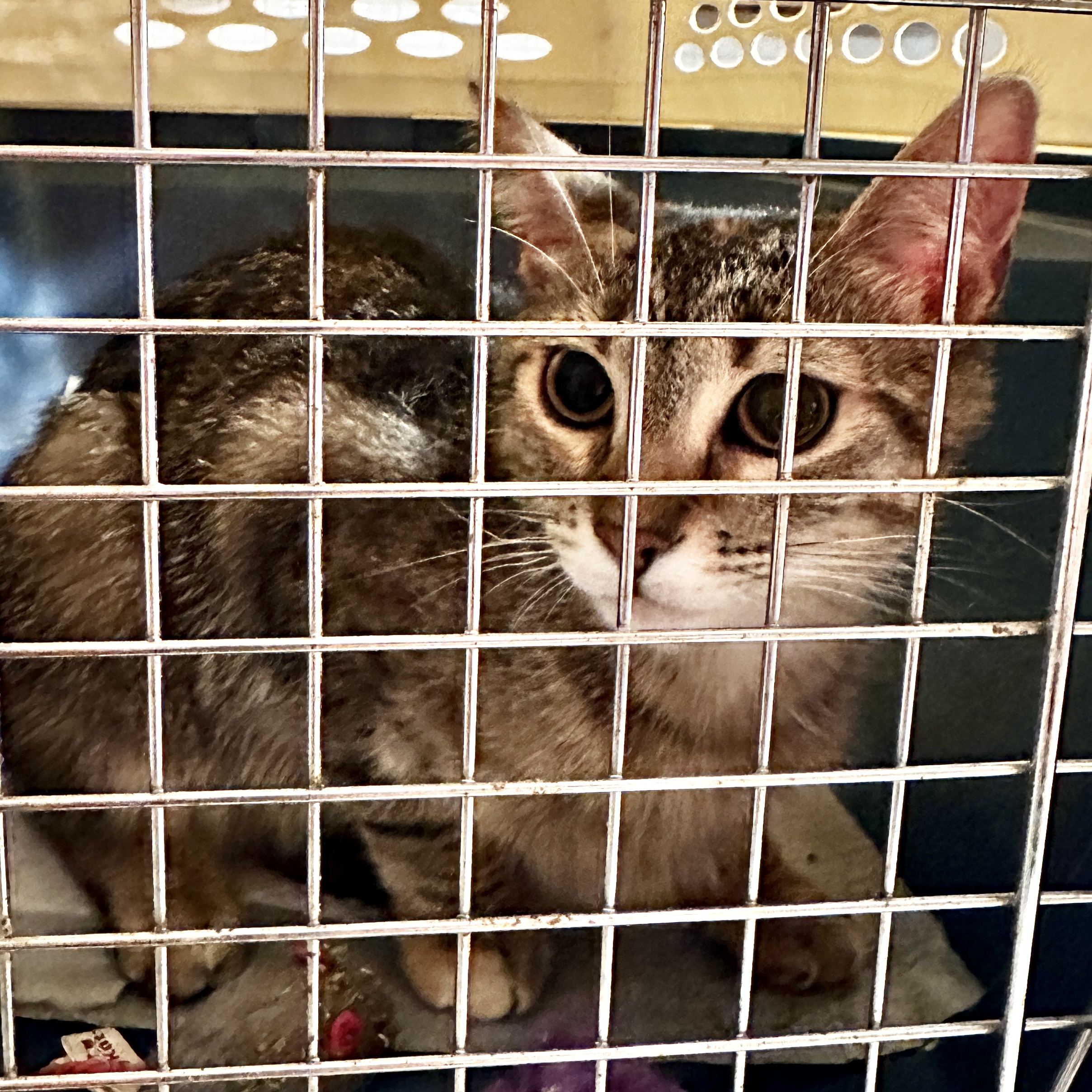
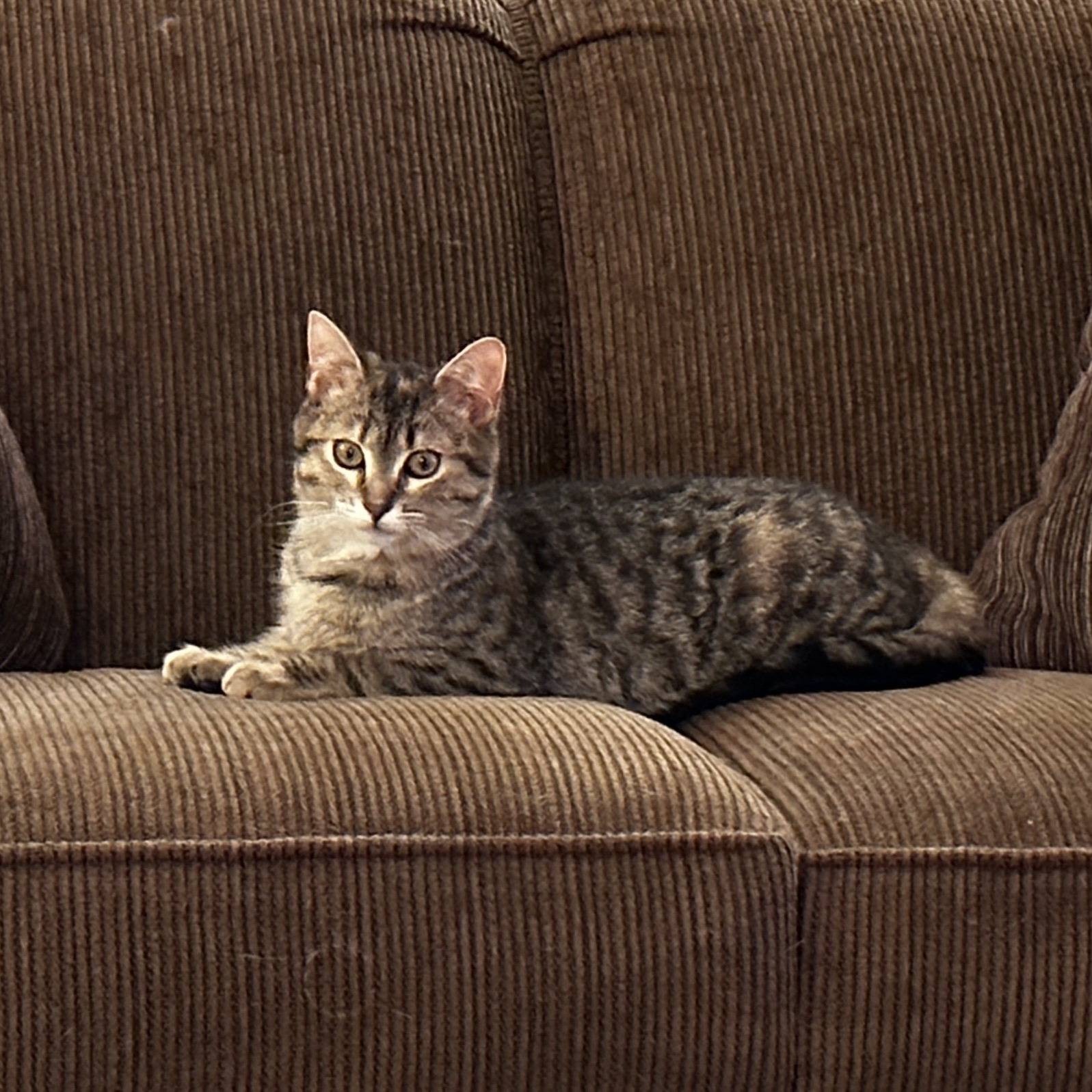
Back in late June, Ivy was the cat who picked me while I visited the local cat rescue’s open house event. While I made the rounds, she followed me from one end of the room to the other and promptly jumped on my lap the moment I sat down. I couldn’t help but be charmed by her endless purring and loving personality. I submitted an adoption application thinking that surely, my sweet, relaxed resident cats would quickly adapt to a charming newcomer.

Following standard “slow introduction” procedures, the first week went well. They progressed rapidly from sniffing at a closed door, to eating on either side of the door, to observing each other through a baby gate, and eventually watching one another with the door open. Past that, things got awkward. 

As soon as Ivy had leeway to explore the house, Anya and Cordy retreated under the bed. Ok, back up to the prior stage of introduction and try again in a few days. This was when we entered the wash, rinse, and repeat phase of attempted introductions – with Ivy desperate to meet her new housemates and them hissing and spitting any time she got close. Rather than improving with exposure, Anya particularly became increasingly resistant and, in some cases, violent no matter how hard Ivy worked to project “friendly” body language. 

For the better part of two weeks, I ran the household in two shifts – With Anya and Cordy tucked in my bedroom from 5 AM to 5 PM and Ivy returned to her “safe room” from 5 PM – 5 AM. It was my misguided hope that as their scents and smells combined in the house, paraphs they’d desensitize to one another. 

Cat Reddit is filled with internet experts that will say six weeks was not nearly enough time to settle things – that it can take months or years for integrate adult cats. If anything, I feel like there’s a lot of talk in the rescue community decrying that adult cats are so often left in shelters and rescues month after month while kittens and youngsters fly out the doors. I always assumed that was a simple function of the “cuteness factor,” but I now have a sneaking suspicion that adult cats are so often overlooked, in part, because introducing adult cats and convincing them to live together can be a nightmare – or at least a significant unplanned hardship that the average person isn’t equipped to deal with. 

Having had many dogs and cats over the years, I consider myself reasonably animal savvy, but I was absolutely unprepared to continue on for month after month with Cordelia and Anya angry and chased out of their home while Ivy was increasingly confused by why she was being cast back into isolation every night. By the end, I suspect it had become a not particularly happy way of life for any of us. Capped off with three scuffles across Friday evening and Saturday morning when trying to re-initiate brief introductions again. 

To their credit, the rescue was incredibly understanding when I reached out to say I needed to bring Ivy back to them. I’d been keeping them up to date with the struggles, so maybe it wasn’t much of a surprise. I suspect the whole experience may have been more traumatizing to me than to Ivy. I opened her carrier at the rescue and she walked out without a moment’s hesitation, head butted the nearest cat, and made herself at home immediately. She was more comfortable and welcome in that room with 10 or 12 other cats in 30 seconds than Anya and Cordy had made her feel in six weeks.

I’ll never think of this period as one of my best moments. I’ll always wonder if there was something more that I could have tried or if hanging on for another week could have made any difference. I’ll probably never get away from thinking that sheer willpower is enough to drag things over the line, but in this case, seeing how Ivy reacted back in the rescue on Saturday and then how relaxed Anya and Cordy were on Sunday is probably the real sign that this particular hard decision was the right one. 

I wish doing the right thing didn’t so often involve being absolutely heartbroken. I really do miss that sweet calico girl.

Three is enough…

By now, I suppose everyone who’s interest already knows that I added a 3rd cat to the list of critters living here on the homestead. Ivy is a sweet, approximately one year old calico female who arrived here by way of the Chesapeake Feline Association, who are effectively neighbors to me here on the bank of the Elk River. They’re a small team doing good work and I was happy to be able to be a small part of it. 

As I’m writing this, Ivy has been home with us for about three and a half days now. She’s briefly met Jorah and Anya at the door to her “safe room,” but hasn’t shown much (if any) interest in checking out the rest of the house yet and seems content to hang out in the guest bathroom for the time being. I’m doing my best to remember that time really isn’t a factor here and it takes as long as it takes to get everyone comfortable with this new arrangement.

Aside from a bit more outlay for food and the inevitable increase in vet bills, tending to three cats instead of two doesn’t feel like it’s adding too much workload at this point. I expect it will become even easier once we get everyone integrated and don’t have to maintain separate feeding, watering, and litter operations. I’m not going to speculate on how long that may take.

I’ve often joked that I’ve reached carrying capacity in the past. Now with five furry and scaled mouths to feed, I really mean it. Five is the absolute upper limit… unless I come into a lot of money and can hire staff, of course. Then all bets are off.

In any case, I’m pleased as punch to have a new member of the family settling in… but I’ll be well and truly thrilled when we get past the awkward introductory stage and can all start living together. 

On the limit of post-operative instructions…

When you leave the vet’s office after one of your little furballs has surgery, they send you home with a post-op care sheet. In theory, this paperwork will tell you what to do, what issues to be on the lookout for, and how to handle some basic situations if they crop up. The post-op sheet isn’t and can’t be an exhaustive reference.

The reason I know this is because it doesn’t address, in any way, the scenario I was faced with this morning. By yesterday evening, Cordelia seems to have overcome her post-surgery lethargy. I’ve seen her eating, drinking, and eliminating – all the things you’re supposed to monitor as your patient recovers.

I don’t suppose any read ahead material really prepares you for starting the day to realize that sometime during the night, the kitten has gone head first into her food dish and smeared food around the circumference of the cone. She also managed to get the edge of the cone into her litter and had that clumped to the cone.

Under normal circumstances (or perhaps with a normal kitten), you might be tempted to think I’d just remove the cone, clean it up, and then put it back on her. The thing is, Cordy remains what I politely like to call selectively feral. She’ll accept being touched on her terms, but when I initiate it, she’s off like a rocket to the nearest available hiding place. She simply will not be “handled.” Thanks to her slight build, those places are most often under things like the bed or dresser and therefore bloody inconvenient places from which to try extracting her.

This leaves me in a bit of a conundrum. I don’t want to put her in a position where she can defile her sutures, but overall, I wonder which is better, removing the cone, cleaning it, and most likely being unable to put her back in it, or leaving her to wander the house for the next week with a crud encrusted cone?

Yeah, there are definitely things the post-op instructions don’t cover.

Maybe I should just hire a staff vet…

It’s Groundhog Day. Again. I schlepped poor Cordelia over to Delaware to get Spayed this morning. It was one of those things that was supposed to come “free with purchase” from the shelter, but after the various go arounds with getting Anya’s eye fixed up, I was more comfortable taking both of them to my own vet. That, of course, means paying all the freight for their medical care myself. Fine. It’s only money.

I feel like we’ve spent an inordinate amount of time dealing with vets these last three months with multiple visits for both Cordy and Anya. I like to imagine we’re going to get a break now that Cordy is finally “fixed.” Given my luck with animal health, I’m trying to mentally prepare for more of the same. If we can fall into a routine of annual visits, that’s great. If it goes the other way, well, we’ll muddle through that too.

The vet says Cordy did well and sent her home with a cone and some pain meds. She isn’t a big fan of the cone. She still doesn’t like to be handled even at the best of times, so hopefully the cone stays on. Catching her and getting it refitted or applying one of the other options would be one of those things I just can’t quite manage to do as a one man band.

I should apologize in advance to anyone I need to deal with over the next 7-10 days. I may be physically elsewhere, but I’ll be entirely focused on what this cat is doing and running every conceivable, statistically improbable what if scenario in my head. Yeah. It’ll be a good time for sure. 

A continuing tale of two cats…

Anya has spent more of her life with me wearing a cone than not. I feel badly about that, but it has been an unfortunate, necessary evil to get her through her initial eye infection, the corrective surgery, and now her spay procedure. I wish I were half as resilient as this little seven pound cat seems to be.

All the literature is quick to point out that spaying your cat is a simple, outpatient surgery. Most of the authoritative online resources say that in 48 hours, your pet should be back to something of their normal selves. The spay itself may be an entirely common surgery, but it’s still invasive as hell, and Anya wasn’t one of those who came around in the usual fashion. Fortunately, she was eating well, drinking regularly, and moving around enough to get to and from the litter box as needed. It’s just now, a full week after her most recent surgery that she’s starting to come around to what I’d consider normal behaviors for her.

This morning she was on my bed demanding ear scratches as soon as my alarm went off. She then followed me around while I prepared and delivered breakfast to all the members of the menagerie. She perched in her overwatch position on the cat tree while I got caffeinated. It doesn’t seem particularly newsworthy unless you know she spent the last week snoozing for 22 hours out of every 24 and often not budging for 8-12 hours at a time. Based on what was reported as “normal,” my level of concern for how she was getting along was beginning to elevate dramatically.

Here’s hoping that this is the start of trending back towards normal… Which should get her there just in time for Cordelia to go under the knife for her own procedure next Monday. Getting these critters settled in has made for an awfully long spring. Had I known what I was in for, I might have made some radically different decisions when picking these two out of the mix. File it away as one of the very few times I’m glad I didn’t know then what I know now.

Maybe by Independence Day, we’ll have everyone off the sick and injured list and start seeing what normal really looks like. I’ve probably just jinxed myself by even thinking about it.

Caught up and cleared…

I was finally able to corral Cordelia and get her over to the vet for her first visit and to get her caught up on vaccinations. The general recommendation is that sort of thing should happen within a week of bringing a new fuzzy little family member home. Since Cordy spent 23 hours a day of her first two months here happily ensconced under my bed, I opted to extend that timeline instead of gearing up for a knockdown, drag out fight.

It’s only been in the last two or three weeks that Cordy has decided she doesn’t mind getting petted or catching a quick nap while laying on her human. To this day, picking her up in my arms is entirely out of the question. All interactions are 100% on her terms. I assume that’s part of the reason she spent several days being mad at me after being the victim of the well-orchestrated early morning snatch and grab operation that led to her getting poked and prodded.

I imagine it’ll be a while before I can even start thinking about trying that again. She’s very studiously avoiding getting within arm’s reach. Now that she’s fully vaxxed and medically cleared the next step is scheduling her spay surgery. I’m going to target sometime about a month from now… mostly so I can let her build up a renewed, if false, sense of security.

She probably wouldn’t agree with me, but I’m feeling good that we have this first step knocked off the to do list.

Heat…

Anya is scheduled for spay surgery in two weeks. It was the first available appointment with my regular vet. I could possibly had it done sooner if I’d have gone back through the shelter and used their choice of vet, but my bigger focus for the last two months has been making sure her eye issues were resolved, so I didn’t especially mind the delay. 

Now that we’re four days in to her first heat, let me be the very first to say that I wish I had been focused on both things simultaneously. She’s eight months old now, so this turn of events is not exactly unexpected. As we drew closer to her appointment, I mostly hoped that the natural course of things would just hold off a bit longer. It didn’t, of course, so I’ve been treated to a solid weekend of caterwauling and sweet Aud being an enormous pain in the ass.

All the other rescue animals who have made their way home with me have either arrived after neutering or had standing appointments to have the operation shortly after they got here. These last few days have certainly made the case in my mind for animals to be neutered before they’re placed in a home. For someone who was less tolerant of animal peculiarities or who doesn’t sleep quite as deeply as I do, I can see where the story might not end well.

At least with Anya there’s light at the end of the tunnel – or at the end of May, whichever comes first. I have to wonder, though, how many other intact animals the shelter has sent out into the world who will end up “unfixed” and contributing to the next wave of unwanted cats. I’m fully aware of the resource limitations they’re contending with, but I have to strongly recommend that Cecil County Animal Services revisit their policy of placing intact cats in the community. At some point it becomes a self-licking ice cream cone.

With Anya’s path more or less laid out, now I’m focused on getting Cordelia caught up with her vaccinations and on someone’s schedule for her own surgery. Whether that will be my regular vet or someone else, remains to be determined. Now that she has emerged from her reclusive, under bed period, I’m cautiously optimistic I’ll be able to get her contained and into a crate without tearing the entire house down in the process. Probably. Maybe.

I love them for it…

Every morning, beginning Monday of this week, between the time my alarm goes off and I flop over to turn on the lights, a certain gray kitten has taken it upon herself to jump up on the bed and give me a headbutt and demand about 45 seconds of ear scratches before she hops down and goes on about her day. Given the trials and tribulations of the last two months, it ranks well up on the list of best possible ways to start the morning.

On Wednesday evening, for the first time, Cordy found the courage to jump up on the recliner to join Anya, who was already well practiced at keeping my legs warm. Through my own twitching, and Jorah’s close quarters investigation, she stayed put until it was time for me to close down the house for the evening. It was a big day for a kitten who was so recently content to spend 95% of her waking hours holed up under my bed.

That this week, among the 51 other weeks of the year, is the one that’s most filled with utter bullshit, it’s been entirely fortuitous that they’ve decided to really make the effort to settle in as full members of the household. Unsurprisingly, they’ve made Tuesday, Wednesday, and Thursday bearable – and I love them for it.

On cats and making assumptions…

I’ll hold the major update on Anya until the end of the week, when we’ve met with the ophthalmologist for her follow-up visit and evaluation. Based on the feedback I’ve been getting from her temporary caretakers in Pennsylvania, her eye is looking good and most of the surgical trauma has resolved successfully. Thursday will, hopefully, release her from the daily regimen of a metric shit ton of drops and pills and leave us with something more manageable in terms of ongoing care. 

While Anya has been gone, I’ve had a fair amount of time to work individually with Cordelia. She’s been challenging in her own way and it’s been slow going. We’ve progressed, though, from her spending all daylight hours under the bed to at least some level of comfort in prowling about the house when Jorah and I are awake. If I plop down on the bedroom floor, she’s quick to break cover to come over for pets. In the last few days, she’s even taken to curling up on my lap. 

It’s a big improvement for a cat who six weeks ago was abjectly horrified if I so much as brushed against her. I’m cautiously optimistic that eventually I won’t have to sit on the bedroom floor if I want to interact with her. Getting this cat out of her shell is a real work in progress. I’d very much like to get her comfortable enough that I can reliably lure her in, if only so I can get her first vet visit in the books and get her scheduled for a spay. Even now she’s too likely to bolt to her favorite hiding place to guarantee delivering her up for a scheduled appointment.

Assuming Anya is, in all likelihood, coming home on Thursday, I’m mentally preparing to take a step backwards with both of them. Anya spent six months in the shelter, a month here, and then two weeks with the vet. Getting her reintegrated into the daily rhythm of the household, I’m sure, won’t be instantaneous. Having her back in the mix will be an adjustment for all of us – but I’m ready to get it started and finished. It feels like it’s about time to settle in and enjoy some time together that isn’t an ongoing low-grade medical crisis from day-to-day. Hopefully. 

What we’ve learned…

After three days with Anya closeted away under medical supervision, we’ve learned a couple of things:

My girl is a perfectly happy cat, doing normal cat stuff, right up until the point where it’s time to take her medicine. Drops, pills, or even just generally being held result in adverse consequences for those attempting to make her do what she doesn’t want to do. Otherwise, though, she’s happy to receive the attention of her temporary keepers.

She’s eating, and drinking, and pooping, and getting the meds she needs to get over the hump following her eye surgery. It’s as good a result as I could hope for a few days after surgery.

I’d be lying if I said part of me doesn’t feel just a little vindicated after claiming so many struggles trying to get her through the first 30 days of treatment. I honestly was starting to wonder if I was somehow gaslighting myself about how hard it was to get this animal to take her meds. The professionals, however, have confirmed that she can, indeed, get spicy.

I’m glad to have confirmation that it wasn’t just me somehow being ragingly incompetent. However, it raises other issues. Unless Anya learns a bit more tolerance to handling and being medicated as she gets older, it could be well near impossible for me to single handedly deliver any kind of even slightly involved or complex home care. Sooner or later, it feels like we’ll inevitably run into a situation where following the best possible medical advice simply isn’t feasible because the patient refuses to cooperate.

That’s not an ideal scenario in a cat with FHV who is likely to need some level of treatment periodically throughout her life. In my more pessimistic moments, I foresee a series of hard decisions where we have to weigh treating the illness versus treating the patient. At some point there has to be a compromise between the best possible treatment and what’s physically possible. Now that we’ve addressed what I hope will be her biggest medical problem, I think we’ll be making future decisions based on quality of life overall versus the often simpler calculus of what’s medically possible.

When the time comes, someone please remind me that sometimes the best action is no action at all. I always find that hard to remember when I’m in the moment.