(Power) Failure…

When you’re in information worker, the one thing you absolutely need to do your job is electricity. Without that one basic staple of modern life, all the other bits and pieces are pretty much irrelevant. Look around your office and name three productivity tools that you can still use if the power is out. And no, you stapler, hole punch, and tape dispenser don’t count as productivity tools. Computers, printers, email, address book, you name it and without electricity they’re not worth a dime.

Going grid down in the middle of the day only serves to remind me how utterly incapable of doing my job I’d be in a real-world long term power outage. I’m a little more prepared to deal with that kind of eventuality in my personal life, but as far as answering the question “How will you do your job when the lights go out?” I’m mostly left to shrug and wish I’d have thought to stash a deck of playing cards in my desk for just such an eventuality.

We’ve raised an entire generation, myself included, who have no idea how things worked before there was a computer on every desk. If I were a boss, it’s the kind of problem that might keep me up at night. Since I’m most decidedly not a boss, I’ll remember in the future to make sure my Kindle is fully charged before leaving the house in the morning from here on out.
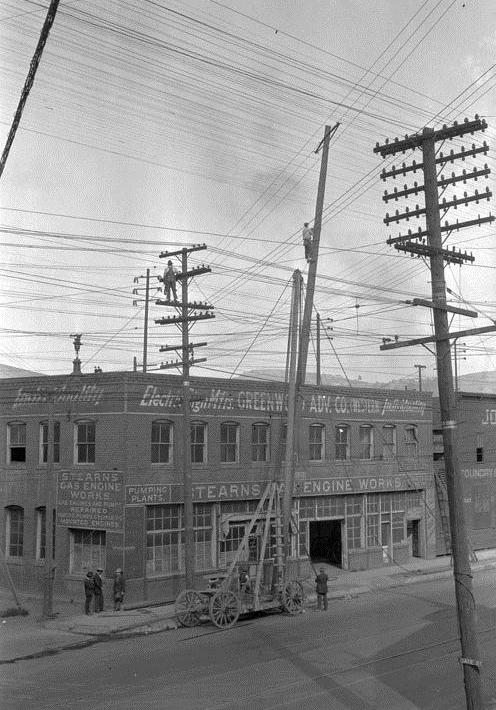
Welcome to the 19th Century…

As we prepare to celebrate Independence Day, it seems perversely fitting that million of our fellow citizens are sitting, literally, in the dark sweltering in the summer heat illuminated by the contemporary equivalent of candlelight. I mean it was good enough for the Founding Fathers, right? While I like irony as much as the next guy (maybe a little more), this should remind all of us of something we collectively never think about until it’s suddenly not working… The fact that we’re running a 21st century economy on top of 19th century infrastructure.

Overhead distribution lines probably worked well enough when all they were running was a few light bulbs in each house. When nearly every conceivable item in the modern house runs on electricity, though, thin copper cable strung on wooden poles seems like a less than ideal solution to delivering uninterrupted service to nearly every home in the country. If the way we distribute electricity isn’t hardened against falling tree limbs, I think it’s safe to assume that it would fare poorly against an actual person or group of people determined to bring the system down.

It’s probably cost prohibitive to bury every mile of every cable in the country, but that doesn’t mean we shouldn’t give it a hard look in places where it makes sense (i.e. in areas of dense population, areas prone to severe storms, etc.). At some point, the cost of continually repairing outdated infrastructure surpasses the cost of, you know, replacing it with something better. Most people don’t drive the same car their great-grandparents bought in 1916, but we’re using the same distribution model they came up with back then. Infrastructure improvement across the board needs to be a national priority because as more people and new technology put increased demand on outdated utilities, the Great Power Outage of 2012 is probably just a preview of good times to come.

Yep, fixing the problem is going to be expensive, but just wait until your power is out for a week or two and tell me all about the cost of doing nothing.